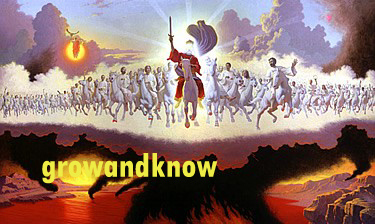
The true gift to give others is the truth about Salvation!
Merry Christmas. Scared ya there for a second didn't I. Ho, ho, ho!
Just to give you some history of why people celebrate Christmas.
CHRISTMAS
The center of Christianity is not the birthday of the Lord Jesus Christ. The center of Christian worship is the death, burial, and resurrection of the Lord Jesus Christ. The Lord left us two ordinances to observe. They are Baptism and the Lord's Supper. Both remind us of the death, burial, and resurrection of the Lord Jesus Christ.
In Baptism, we have a picture of the burial and the resurrection. In the Lord's Supper, we have the picture of His death in the broken bread, and His life in the cup representing His incorruptible, sinless blood.
There is not a shred of evidence that the disciples or the early church ever celebrated the birthday of Jesus. Nowhere does the Scripture ask us to celebrate His birthday, but again and again we are asked to celebrate His death day.
Calvary, not Bethlehem, is the heart of Christianity. If you are not saved, then you need to look at what happened at Calvary. Jesus Christ came into the world to die there upon the cross for your sins. You can believe in the birth of Jesus Christ and still be lost. To be saved, you must believe that Christ died to pay the penalty for all your sins.
The book of Revelation says of Christ, "Unto Him that loved us, and washed us from our sins in His own blood (Revelation 1:5)." We are redeemed not by the birth of Christ, but by the death of Christ.
I say all of this because there are multitudes of men and women who will celebrate Christmas each year and yet deny the need of the substitutionary sacrifice of Jesus Christ as the means of their salvation. Nothing but the blood of Jesus Christ shed at Calvary's cross can wash away our sin.
It is interesting that of Matthew, Mark, Luke, and John, only two of them tells us of the birth of Christ, and none of the four gospels mentions the date that Jesus was born. There is not mention of His birthday in the Bible. We are not told the day, month, or year. Yet we know exactly when He was crucified. He was crucified on the preparation day of the Passover. The Passover always occurred on the 14th day of the first month of the Jewish calendar.
Remember that the four gospels tell us in the greatest detail where He was born, where He lived and what He did. They also tell in great detail how and when He died. But they are completely silent as to the date or the day of His birth. Did they forget, or was it left out on purpose? Could it be that God knew that man would make more of His birth than His death when God wanted us to make more of His death than His birth? It is certainly worth thinking about. Unless you have been to Calvary, Christmas is of no value.
Each of the four gospels give us a different picture of the person of Jesus Christ. Matthew's gospel pictures Christ as a King. Mark's gospel presents Christ as a Servant. Luke's gospel presents Christ as a Man, and John's gospel presents Christ as God.
The Bible is truly an amazing book. The phrase "Son of God" means Jesus is God, and the phrase "Son of Man" means Jesus is Man. The Jewish phrase "son of" means to have the same nature as, characteristics as, and to essentially act the same as. Jesus as the Son of God was never born, but as the Son of Man He was conceived of the Holy Spirit and born of a virgin. The prophet Isaiah foretold this in Isaiah 9:6.
"For unto us a child is born, unto us a son is given: and the government shall be upon His shoulder: and His name shall be called Wonderful, Counselor, The mighty God, the everlasting Father, the Prince of Peace."
Notice the phrase "a child is born...a Son is given." If Isaiah had said "A child is given...and a Son is born," it would have been a mistake. As the Son of God, Jesus was never a child, but as the Son of Man He was born as a baby, grew up a child, and so on.
John's gospel tells us of the Son who was given, and Luke's gospel tells us of the child who was born. The record in Mark's gospel omits any mention of Jesus' birth. Since Mark presents Christ as a Servant, a record of the birth is unnecessary. A servant's ancestry is of no interest to us. All we require of a servant is work. Mark's gospel is filled with the works of Christ.
Matthew's gospel presents Christ as a King. Here the birth account is very important. Matthew shows how He is heir to the throne being of the lineage of King David. Also, He is visited by wise men who come seeking the King. The wise men said, "Where is He that is born King of the Jews (Matthew 2:2)?"
Luke's gospel presents Christ as a Man. So, again, the genealogy is important for tracing Christ's lineage all the way back to Adam, the first man on earth. Also, in Luke's gospel, Christ is visited by poor shepherds who come seeking a baby, a human Saviour,
The Bible presents the whole world as lost and incapable of saving itself. The whole human race would be cast into hell if no Saviour were found. Man's best works are filthy rags in the sight of God. They cannot help man out of his dilemma. "This is a faithful saying and worthy of all acceptation, that Christ Jesus came into the world to save sinners: of whom I am chief (I Timothy 1:15)."
Luke 2:11 announces that Jesus is the Christ, which means He is the Messiah--the anointed Saviour. This is the One promised by all the Old Testament prophets. Luke 2:11 presents Jesus as LORD, which means He is God. The Bible clearly presents Jesus Christ as being, "God manifest in the flesh". (See I Timothy 3:16, II Corinthians 5:19, etc.)
"But God commendeth his love toward us, in that, while we were yet sinners, Christ died for us." At Christmas, let's remember why He was born. Let's take the opportunity to tell the message of His death, burial, and resurrection.
The bottom line is this: "For the wages of sin is death, but the gift of God is eternal life through Jesus Christ our Lord (Romans 6:23)." The GIFT OF GOD IS ETERNAL LIFE! If you haven't received the gift of God, then you have missed the meaning of Christmas. Many celebrate Christmas all of their lives and have never received the gift of Christmas. Have you received the gift of God? If not, then you will spend all eternity in hell separated from God.
Your most important choice in life is to receive this gift! It is not available at the local shopping mall. You can't buy it. We don't deserve it, and we cannot earn it. The ONLY WAY the gift of God may be received is "THROUGH JESUS CHRIST OUR LORD". You must trust Jesus Christ as the ONE who died for your sins on Calvary, was buried and rose again from the dead. Trust Him to save you! The moment you do, He will save you.
If you have received the gift of God, why not distribute this gift to others! The gospel is the good news that "whosoever believeth" can also received this free gift!
We pray that you and your family have a wonderful CHRISTMAS!
Biblelineministries.org
When the snow lay round about
Deep and crisp and even.
O.K., Christians of the world: Church history for one hundred. When is the Feast of Stephen and to whom does it refer? (Pause for hemming and hawing.)
It's December 26, the day after Christmas, when the death of the church's first martyr, Stephen, is traditionally commemorated. Trivial, yes, but most Christians can't give me the correct answer.
My preoccupation with this began a year ago, when I found myself sitting in an evangelical church in early December listening to the singing of Christmas carols. "Could the church have lost its mind?" I thought. It has become so much like the world.
In the ancient church, Christmas was celebrated on... Christmas. Everything prior to that was a preparation for the big day but Christmas itself wasn't celebrated until midnight, December 24th, when the Christ child was welcomed into the world.
Christ wasn't actually born on December 25th. The actual date is a subject of debate. But in 336 a.d. the church set the date at December 25th (Julian calendar) to offset the pagan celebration of the winter solstice at the Saturnalia, much as churches today have "harvest parties" to offset what is becoming an increasingly occult Halloween.
Following the time of the apostles, the early church began to develop organization and worship in five major centers around the Mediterranean: Jerusalem (naturally), Antioch, Alexandria, Constantinople and Rome.
Just as the Jewish calendar had an annual series of liturgically rotating feasts that God ordained in the Old Testament, so the form of worship in the early churches rapidly developed into a liturgical calendar centering around the Lord's Supper, which originally they all shared in one form or another.
Distance caused the different liturgies to diverge in the selection of prayers, requirements and customs, but after the Great Schism between the Roman and Orthodox churches in 1054, the liturgical form of worship was still retained. The western church followed the Roman rite (the Mass) and the Orthodox churches followed the liturgy of St. John Chrysostom. Both still today have major portions of their rites in common.
The Roman church developed a hierarchical structure centered around the papacy and the bishops. The Orthodox churches developed a more networked approach, centering around the bishops, all of whom were in affiliation with each other in what were called autocephalos or independent churches, who reported to a Metropolitan.
During the Reformation, the Lutheran church retained the form of the Roman liturgy and much of the church structure but corrected what it believed were non-Biblical errors that had crept into the Roman church over the centuries. The Anglican church likewise retained the church structure and worship.
Other Christian groups opted to throw out all of it in favor of different, more simplistic and often stark forms of worship. In retrospect, they may have thrown out the baby with the bath water, retaining only key dates such as Christmas, Easter and possibly Pentecost. Some introduced a few new ones, such as Reformation Sunday.
In trying to counter the secularization of its holy days, the church is having a difficult time because it has forgotten the origins of its celebrations.
Advent
In western churches the four Sundays prior to Christmas were called Advent, coming from the Latin verb advenire, meaning "to come towards."
The church was decorated in purple, along with the priest who wore the same color, signifying penance. Prior to December 25th, the church was in a period of penance, preparation and anticipation of the Messiah's birth. Fasting was observed several times a week. All of the hymns and prayers reflected this repentance and preparation; a period of darkness into which the Lumen Christi (the light of Christ) must come.
Scripture readings from the Old Testament and the Gospels matched the season, such as the Old Testament prophecies about the Messiah and Gospel passages about the ministry of John the Baptist preparing the way for Christ.
Hymns included "On Jordan's Bank the Baptists Cry" and "O Come Immanuel" but never a Christmas carol. Christ had not yet arrived.
Then Cometh Christ's Mass
For centuries the Midnight Mass on Christmas Eve was a radical change from the previous four weeks—this liturgical text became the centerpiece of a number of Baroque and classical compositions.
Christmas itself means Christ's Mass—the mass celebrated on Christmas Day. The church was decorated and ablaze with lights. Colors had shifted from purple to gold and white and the traditional green/red themes. Much incense was used. Christ had finally come. This was a time of great celebration, and hence the use of the word "feast" to designate the day.
Other Christmas Traditions
The Middle Ages saw the beginnings of liturgical dramas (often called "mystery plays") designed to portray Biblical stories surrounding Christmas. Recall that the majority of the population of Europe at the time was illiterate and so the mystery plays provided a method of teaching Biblical things. Over the centuries the mystery dramas started to become profane and secular in nature (sound familiar?) and so performances in churches were eventually banned.
Also, manger scenes (or crèches as they were called in French) began to appear, and it was a Christmas custom for every family to visit the crèche.
The Advent Wreath
The custom of the Advent wreath evolved in northern Europe. The wreath has four candles: three purple and one pink. In some cases, three red and one white candle are used.
One candle is lit on each Sunday of Advent at dinner time and the family sings "O Come Immanuel" prior to the blessing. The third Sunday of Advent is a different color, signifying that while we are still in darkness, there is hope and the light of Christ is coming.
In the western church it was called Gaudate (gow-day-tay) Sunday, meaning we should rejoice, for there is hope.
In America, the tradition has started of adding a white candle in the center on Christmas Day to signify that the light of Christ has come into the world.
Some Lutheran churches reverse the Advent wreath process, using a ring of candles, one for each Sunday of Lent prior to Holy Week. Sunday after Sunday one less candle is lit until finally, on Good Friday, the center Christ candle is extinguished.
There are as many Christmas traditions as there are countries and centuries. Many had strictly Christian origins. Others are a mix of vestiges of pagan custom adapted into Christianity. This, and the observance of Christmas itself, has been the source of much debate, which is not the subject of this article.
The Twelve Days of Christmas
The Twelve Days of Christmas ranks as part of the regular Christmas carol fare. So what are they? They are the days when Christmas was traditionally observed, between December 25th and January 6th. January 6th was the Feast of the Epiphany, when the three Wise Men finally arrived, thus the twelve days when Christmas was celebrated.
In some places presents were given each day of the twelve days instead of tearing into a big wallop of presents on December 25th. Traditionally the Christmas tree went up on December 24th in the evening and came down on January 6th.
The Feast of the Holy Innocents is celebrated on December 28th, commemorating the children who were killed in Bethlehem as Herod sought to destroy the child Jesus.
Santa Claus
Santa Claus means Holy Claus, short for Nicholas. The word "santo" is "holy" in Latin as well as its descendent tongues, such as Spanish and Italian. According to the Encyclopaedia Britannica, St. Nicholas was born in the ancient city of Patara. As a youth he traveled to Palestine and later became Bishop of Myra. He was imprisoned during the persecution of Christians under Emperor Diocletian and was later attendant at the First Council of Nicea in 325 a.d.
Legend says that he showed unusual kindness to the poor and the weak; oftentimes leaving things for them while they were asleep. In the Middle Ages he became patron saint of charitable fraternities, children, and other things as well as patron saint of the City of Moscow, Russia. After the Reformation, the legend of St. Nicholas died out everywhere except in Holland. It migrated to the U.S. with Dutch Reformed Christians.
Later in Germany, St. Nick would traditionally arrive on his Feast Day, December 6th. A man dressed as St. Nick would go door to door loaded with a giant sack. To those children who had been good during the year, he gave presents. To those who had been bad, a lump of coal was their lot. "How did he do that?" the kids would wonder.
St. Nicholas's red outfit was derived from the red colors bishops wore. The modern version of St. Nick originated in a series of Thomas Nast engravings, which appeared in Harper's Weekly between 1863 and 1886.1
Other Traditions
The Night before Christmas was first published in 1822 and picked up widespread popularity and republishing. During Queen Victoria's reign in England, tree decorating was well under way. Martin Luther is reported to have been the first person to actually put lights on a Christmas tree. (One can only speculate whose house was the first to burn down as the result of a Christmas tree.)
In 1880, Woolworth's first sold manufactured Christmas tree ornaments and they caught on very quickly.2
In Mexico and southern parts of the United States, Las Posadas has been a major tradition, which is now spreading in popularity. Las Posadas sees children going door to door asking for shelter, just as Joseph and Mary did when Mary was about to give birth to Jesus. The answer from the person who answers is always a negative head shake and the response, "no posada" (no shelter). Candles placed in paper bags (luminarias) serve as chains of lanterns on the ground leading up to the doors to show the expectant couple the way.
Rudolph, the genetically mutant reindeer, is a latecomer and has absolutely no religious significance whatsoever. In 1939, Santas at Montgomery Wards gave away 2.4 million copies of a booklet called "Rudolph the Red-Nosed Reindeer." 3 It was written by Robert May, an advertising executive in the store. In 1949, western singer Gene Autrey did a musical rendition of the poem and it became an overnight best-seller.
Christians today tend to fight the ongoing secularization of their holidays. Some have rejected anything to do with them, saying they are not Biblically ordained. Others have tried to go back to keeping the Jewish feasts instead. It should be pointed out that the New Testament doesn't really ordain anything other than the Lord's Supper. But it does not prohibit it either, and under grace Christians are free to honor different days if they wish.
Those families who want to keep Christ as the center of Christmas may find it easier to do by understanding the various symbols that have been used to celebrate Christ's birth through the ages and using them to retain the uniqueness inherent in the mystery of the incarnation: the birth of the Son of God.
Merry Christmas to one and all,
Mark


No comments:
Post a Comment